Friction
Friction in design refers to any obstacles or difficulties that hinder the user’s ability to complete tasks or achieve their goals. Friction can come in many forms, such as complicated navigation, unclear instructions, slow load times, or unclear error messages. The more friction a user encounters, the more likely they are to abandon the task or become frustrated. In the context of UX design, the goal is to minimize friction to create smooth, seamless, and efficient experiences. By identifying areas where friction occurs, designers can streamline processes, clarify content, simplify interactions, and remove unnecessary steps to improve the overall user experience. Reducing friction is essential for increasing task success rates, enhancing satisfaction, and improving user retention.
Friction is the silent killer of conversion and activation rates. Users rarely tell you that friction is why they gave up — they just stop. Mapping your core user flows and counting every click, form field, loading state, and decision point is one of the most revealing exercises a product team can do. Reducing friction in your critical path (signup → first value moment) is often worth more than building new features.
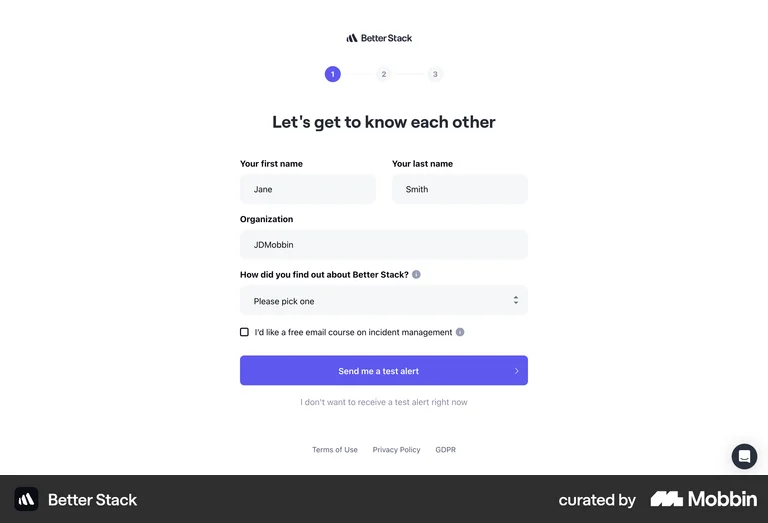
Better Stack's 3-step onboarding form asks for name, organisation, and referral source on a single screen — a multi-field form whose required fields are the source of friction slowing the path to first value.