Progressive Disclosure
Progressive Disclosure is a design technique where only essential information is shown initially, with more detailed or advanced options revealed progressively as needed. This approach simplifies the user experience by reducing cognitive load and preventing users from being overwhelmed with too much information at once. It is commonly used in forms, settings pages, and complex workflows.
Progressive disclosure is the solution to the tension between simplicity for new users and power for advanced ones. Instead of choosing, you layer: show the essentials by default, reveal more when users signal readiness through actions or explicit requests. For SaaS products with wide feature sets, progressive disclosure is what allows you to have both a 5-minute time-to-value for new users and the depth that power users need — without a complex settings page up front.
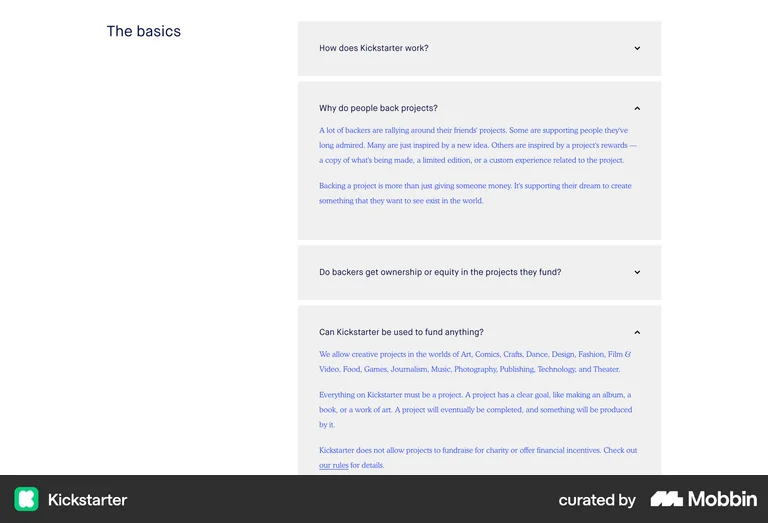
Kickstarter's FAQ section uses an accordion pattern — questions are always visible, answers expand on click — so users can scan all topics at a glance and only read what's relevant to them.